Authorities have warned that significant numbers of new COVID-19 cases were being found in the community.
It's raising fears of fresh clusters as authorities reported a rise in new infections for a third straight day.
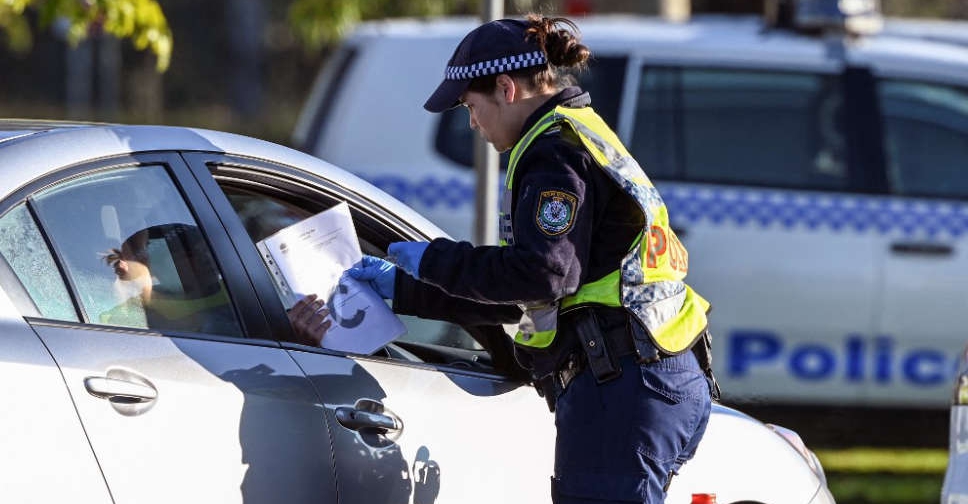
With state capital Sydney in the middle of a two-week lockdown to contain an outbreak of the highly infectious Delta variant, authorities said half of Thursday's total of 24 new cases had spent time in the community when infectious.
"(This) is a cause of concern. That is what we will be looking at in the next few days and beyond as a measure of our success," NSW Premier Gladys Berejiklian told reporters.
Berejiklian said many people with flu-like symptoms were ignoring lockdown orders and "going about their business".
"We can't allow that to happen ... assume that you have the virus or that people you come into contact with have the virus and act accordingly," she said.
Australia is battling simultaneous flare-ups of infections in several states and nearly half of all Australians are under stay-at-home orders to prevent any major outbreak of the Delta strain.
Sydney, Perth, Brisbane and Darwin imposed lockdowns in the past few days, following months in which Australia had nearly eliminated the virus.
The remote outback town of Alice Springs, gateway to UNESCO World Heritage-listed Uluru, was also locked down on Wednesday after an infected traveller spent hours in the city's airport.
The total number of cases in the latest outbreak in NSW, the worst affected state, neared 200 since the first case was detected more than two weeks ago in a limousine driver who transported overseas airline crew.
Queensland state on Thursday detected two new local cases, as it tracks four different virus clusters - three of them the Delta variant. The Northern Territory detected one new case, South Australia and Western Australia recorded no cases.
Australia has fared much better than many other developed countries in containing the novel coronavirus through lockdowns, swift contact tracing and strict social distancing, with just over 30,550 cases and 910 deaths.
However, a sluggish vaccination drive has put the federal government on the back foot.
The government earlier this week decided to indemnify doctors who administered AstraZeneca's vaccine shots to people under 60, in an effort to ramp up inoculation.
But several states have declined to administer AstraZeneca shots to under 60s due to the higher but still low risk of blood-clotting in younger people.
Lieutenant General John Frewen, the head of the country's vaccine taskforce, said more than 2,600 people under 40 years had received AstraZeneca shots since Monday.
"Right now, they would rather have the available vaccine than wait. I think all Australians have that right," Frewen told broadcaster Channel Nine.


 Trump vows to blockade Strait of Hormuz after Iran peace talks stumble
 Nigerian airstrike hits market, 200 feared dead
 Russia, Ukraine trade accusations of ceasefire violations
 At least 30 dead in stampede at Haiti’s historic Laferriere Citadel
 Cyclone lashes New Zealand's North Island, hundreds evacuated