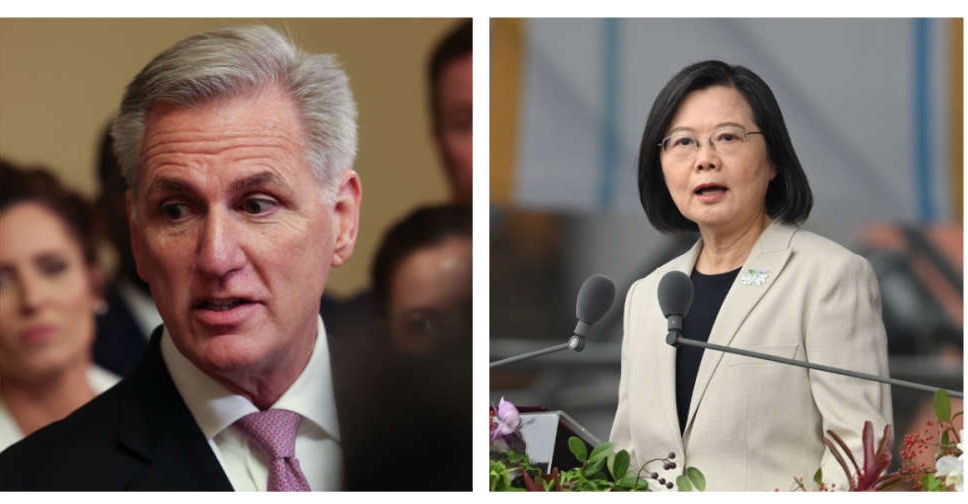
China threatened to retaliate on Wednesday if U.S. House Speaker Kevin McCarthy meets Taiwan President Tsai Ing-wen during her planned transit of the United States next month.
Beijing said any such move would be a "provocation".
China, which claims democratically-ruled Taiwan as its own territory, has repeatedly warned U.S. officials not to meet Tsai, viewing it as support for the island's desire to be seen as a separate country.
China staged war games around Taiwan last August when then-U.S. House Speaker Nancy Pelosi visited Taipei, and Taiwan's armed forces have said they are keeping watch for any Chinese moves when Tsai is abroad.
Tsai is due to depart on Wednesday for a trip to Guatemala and Belize that will see her transit through New York and Los Angeles.
While not officially confirmed, she is expected to meet McCarthy while in California, at the end of her trip.
Zhu Fenglian, spokesperson of China's Taiwan Affairs Office, told reporters in Beijing that Tsai's "transits" of the United States were not just her waiting at the airport or hotel, but for her to meet U.S. officials and lawmakers.
"If she has contact with U.S. House Speaker McCarthy, it will be another provocation that seriously violates the one-China principle, harms China's sovereignty and territorial integrity, and destroys peace and stability in the Taiwan Strait," she said.
"We firmly oppose this and will definitely take measures to resolutely fight back," Zhu added, without giving details.
The United States says such transits by Taiwanese presidents are routine and that China should not use Tsai's trip to take any aggressive moves against Taiwan.
Taiwanese presidents routinely pass through the United States while visiting diplomatic allies in Latin America, the Caribbean and the Pacific, which, although not official visits, are often used by both sides for high-level meetings.
China says that both it and Taiwan belong to "one China" and that as a Chinese province the island has no right to any sort of state-to-state ties.
Taiwan's government strongly rejects China's sovereignty claims, and while Tsai has repeatedly offered talks with Beijing she has also said only Taiwan's people can decide their future.
Tsai is expected to make comments at the airport before her flight leaves for New York.


 US to blockade Iran on Monday after talks fail to yield a deal
 One killed in Ukraine despite Easter ceasefire, officials say
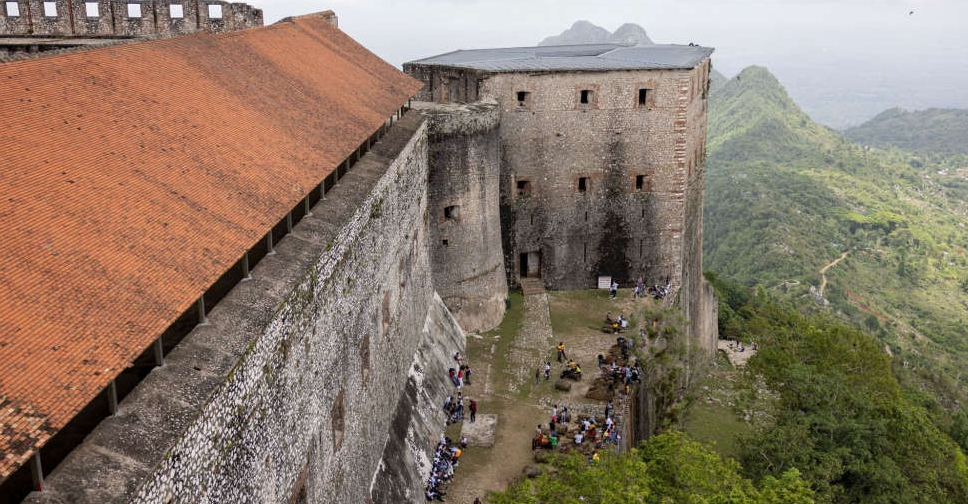 Haiti declares three days of national mourning for 25 killed in stampede
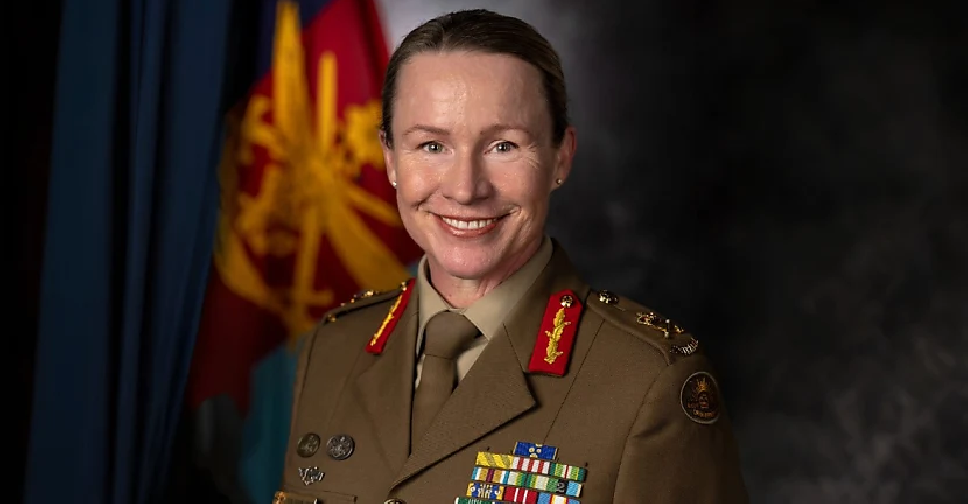 Australia appoints woman to lead its army for the first time
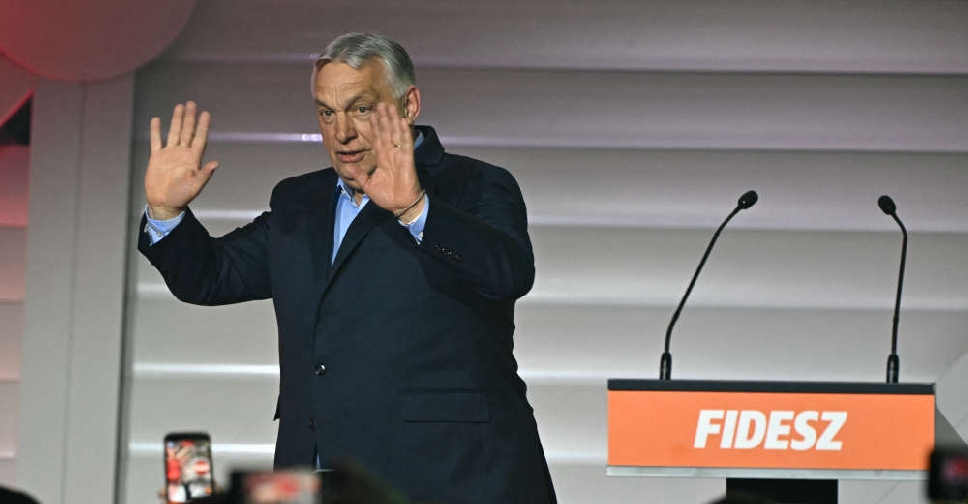 Orban ousted after 16 years as Hungarians flock to pro-EU rival