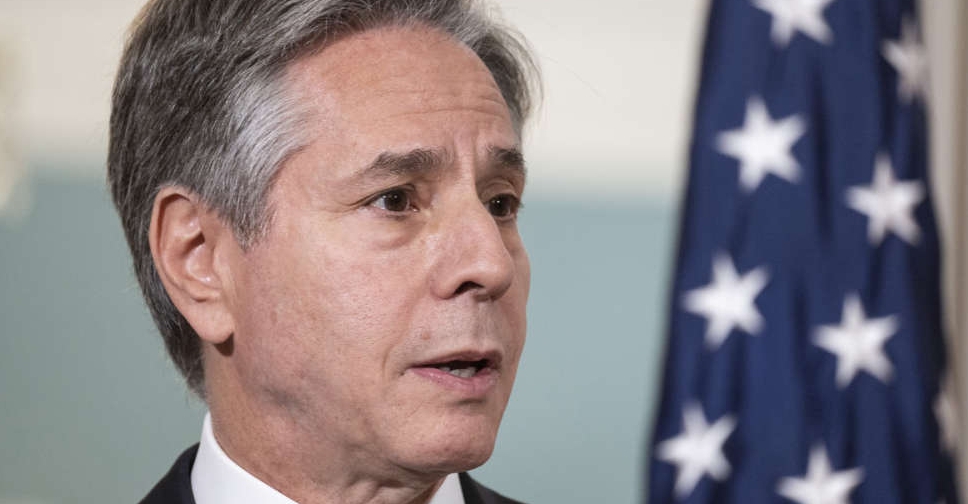
US Secretary of State Antony Blinken called key ally South Korea to discuss the results of his visit to China this month, South Korea's Ministry of Foreign Affairs said on Saturday.
Blinken told South Korean Foreign Minister Park Jin he had an honest, practical and constructive dialogue with the Chinese side and wanted to explain the results of his visit in as much detail as possible, a ministry statement said.
Blinken and Park decided to continue to communicate regarding relations with China and to urge Beijing to play a constructive role in North Korea's suspension of provocations and denuclearisation, the ministry said.
During the visit to China, where Blinken met President Xi Jinping and other top officials, the two sides agreed to stabilise their intense rivalry so it does not veer into conflict but failed to produce any major breakthrough.
Meanwhile, North Korea criticised Blinken for trying to get China to pressure Pyongyang to lay down arms and warned that its response would grow "more overwhelmingly and aggressively" to any stronger military measures by the United States on the Korean Peninsula, state media KCNA said on Saturday.
Blinken's "threats" for China to pressure Pyongyang expresses a "dangerous hegemonic mentality", KCNA said, citing a North Korean foreign ministry official.
KCNA also criticised the US for sending military assets, including a nuclear-powered submarine, to the Korean Peninsula, risking "peace and security".
North Korea fired two short-range missiles off its east coast last week, less than an hour after Pyongyang warned of a response to military drills by South Korean and US troops.
The isolated country is under international sanctions over its nuclear weapons and ballistic missile programmes.


 US-Iran peace talks end without agreement, delegations leave Pakistan
 Russia, Ukraine trade accusations of ceasefire violations
 At least 30 dead in stampede at Haiti’s historic Laferriere Citadel
 Cyclone lashes New Zealand's North Island, hundreds evacuated
 US-Iran talks pause for now, disagreements remain