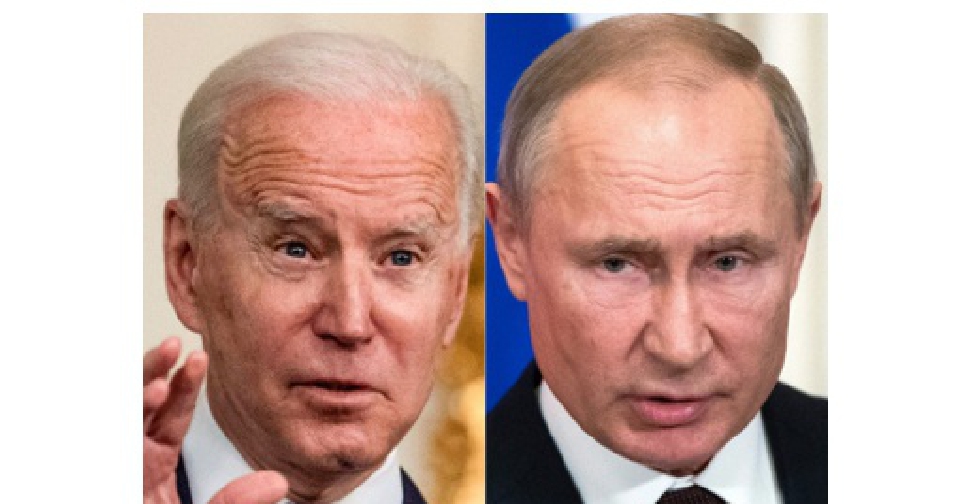
US President Joe Biden and Russian President Vladimir Putin will meet in Geneva on June 16.
It comes amid their sharp disputes over election interference, cyber atttacks, human rights and Ukraine.
"The leaders will discuss the full range of pressing issues, as we seek to restore predictability and stability to the US-Russia relationship," White House Press Secretary Jen Psaki said.
The Kremlin said in a statement that the two leaders would discuss bilateral ties, problems related to strategic nuclear stability, and other issues including cooperation in the fight against COVID-19 and regional conflicts.
Biden has previously said he wants Putin to stop trying to influence US elections, stop cyberattacks on US networks emanating from Russia, stop threatening Ukraine’s sovereignty and release jailed Kremlin critic Alexei Navalny.
The White House has avoided describing Biden as seeking a "reset" in relations with Putin, a term often used by former US presidents as they seek to improve relations with Russia.
Rather, US officials see the face-to-face meeting as an opportunity to tilt the relationship away from what they see as former President Donald Trump's fawning overtures to Putin.
Russian officials told Reuters they view the summit as an opportunity to hear from Biden directly after what a source close to the Russian government said were mixed messages from the US administration that took office on January 20.
Putin views US pressure on Navalny and its support for pro-democracy activists in Russia and Belarus as tantamount to interfering in Russian domestic affairs.
Moscow is also unhappy about a raft of US sanctions aimed at Russian entities and individuals - and Biden’s threat of more.
A former Soviet republic, Belarus maintains close political, economic and cultural ties to Russia and belongs to a Russian-led military alliance.
One topic likely to come up is Western outrage at Belarus, which scrambled a fighter and flagged what proved to be a false bomb alert to force a Ryanair plane to land on Sunday in Minsk, where authorities arrested a Belarusian dissident journalist.
Russia has denied reports that four Russian nationals got off the plane in Minsk, which sparked suspicions of Russian involvement.


 Trump to wrap up Xi summit with a tour of US archives
 France to send military to protect Saudi Arabia, Macron says
 Gaza facing world's worst economic crisis, says UNCTAD
 At UN, Netanyahu defends Israel as delegates walk out
 Trump welcomes Xi to Washington looking for a trade win