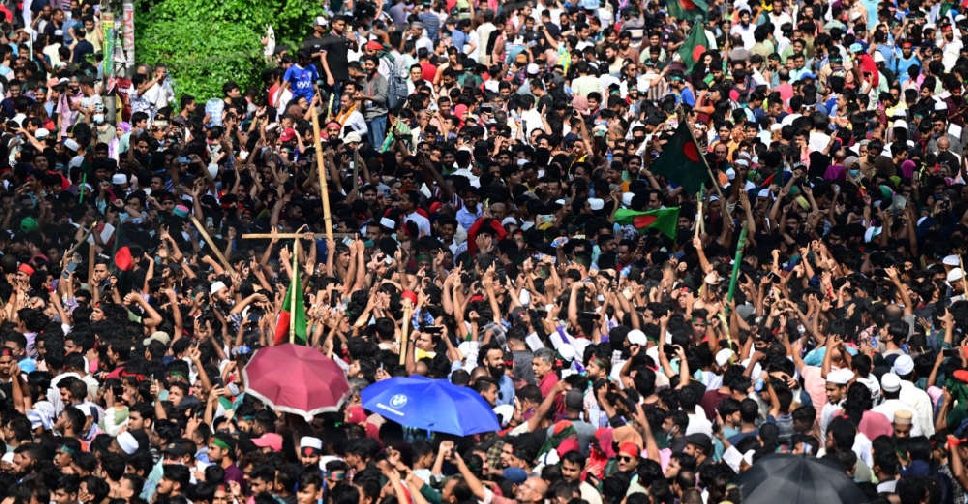
Bangladesh's president dissolved parliament on Tuesday, clearing the way for an interim government and new elections, a day after Prime Minister Sheikh Hasina resigned and fled following a violent crackdown on a student-led uprising.
President Mohammed Shahabuddin's office also announced that the leader of the opposition Bangladesh Nationalist Party, Begum Khaleda Zia, a former prime minister who had feuded with Hasina for decades, had been freed from house arrest.
Student protesters had threatened more demonstrations if parliament was not dissolved.
The movement that toppled Hasina rose out of demonstrations against public sector job quotas for families of veterans of Bangladesh's 1971 independence war, seen by critics as a means to reserve jobs for allies of the ruling party.
About 300 people were killed and thousands injured in violence that ripped through the country since July.
After demonstrators stormed and looted the prime minister's lavish residence on Monday, the streets of the capital Dhaka were again quiet on Tuesday, with traffic lighter than usual and many schools and businesses that shut during the unrest still closed.
The decision to dissolve parliament was taken following meetings with the heads of defence forces, leaders of political parties, student leaders and some civil society representatives, the presidential statement said.
Hasina's flight ended her 15-year second stint in power in the country of 170 million people, which she had ruled for 20 of the last 30 years at the helm of a political movement inherited from her father, state founder Mujibur Rahman, assassinated in 1975.
Since the early 1990s Hasina had feuded and alternated power with her rival Zia, who inherited her own political movement from her husband Ziaur Rahman, a ruler himself assassinated in 1981.
Protests against Hasina were fuelled in part by poverty. After years of strong economic growth as the garment industry expanded, the $450 billion economy struggled with costly imports and inflation, and the government had sought a bailout from the International Monetary Fund.
Hasina was accused of becoming increasingly authoritarian, with many of her political foes jailed. Her resignation was greeted by jubilant crowds, who stormed unopposed into the opulent grounds of her residence after she fled on Monday, carrying out looted furniture and TVs.
President Shahabuddin had said earlier that an interim government would hold elections soon after it takes over. Army Chief General Waker-Uz-Zaman was due to meet student leaders to discuss the formation of the government.
Hasina flew to India and is staying at a safe house outside New Delhi. India's Foreign Minister Subrahmanyam Jaishankar told parliament that New Delhi had repeatedly "counselled restraint and urged situation to be defused through dialogue".
The student leaders said they want Nobel Peace laureate Muhammad Yunus as the chief adviser to the interim government and a spokesperson for Yunus said he had agreed.
Yunus, 84, and his Grameen Bank won the 2006 Nobel Peace prize for work to lift millions out of poverty by granting tiny loans of under $100 to the rural poor of Bangladesh. He was indicted by a court in June on charges of embezzlement that he denied.

 US military to begin Iran maritime blockade on Monday
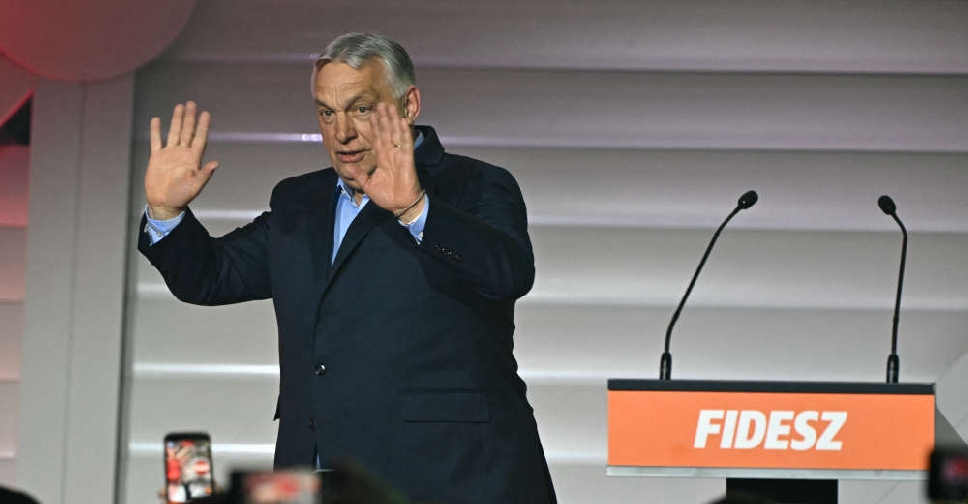 Hungary's Orban concedes landmark election defeat
 Trump vows to blockade Strait of Hormuz after Iran peace talks stumble
 Nigerian airstrike hits market, 200 feared dead
 Russia, Ukraine trade accusations of ceasefire violations