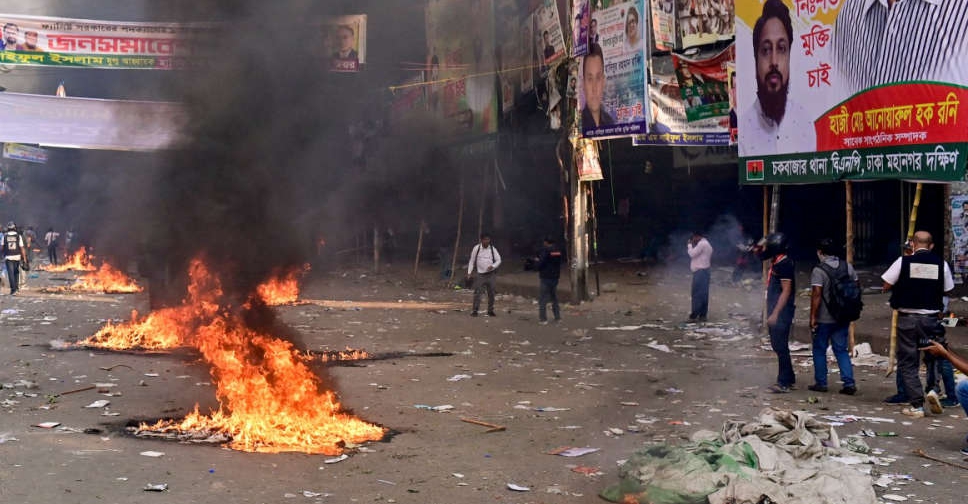
One police officer was killed in Bangladesh on Saturday, and over 100 people were injured during an opposition party protest demanding the resignation of Prime Minister Sheikh Hasina and calling for a free and fair vote under a caretaker government.
Police fired tear gas and rubber bullets as clashes erupted when tens of thousands of supporters of the opposition Bangladesh Nationalist Party (BNP) gathered in the capital Dhaka, chanting slogans against the government.
Dozens of vehicles, including police vans and ambulances, were set on fire, police and media said.
Dhaka Metropolitan Police spokesman Faruq Hossain told reporters one officer had been killed and 41 others were injured in clashes with protesters.
Several journalists were attacked and injured while trying to cover the clashes, media reports said.
Security was tightened in the city recently as thousands of people arrived to attend the rally. Hundreds of opposition party activists have been arrested, BNP leaders said.
The party has been calling on Hasina to resign to allow elections scheduled in January to be held under a neutral caretaker government - a demand her government has so far rejected.
"Today's rally continued for hours in a perfectly disciplined and peaceful manner until all of a sudden the lobbing of tear gas shells started," senior BNP leader Abdul Moyeen Khan told Reuters.
"The intensity increased, and violent attacks with sounds of blasts and shootings turned the whole place into a war zone."
The BNP has called for a dawn-to-dusk countrywide strike in protest against the police action.
"I came to protest the enforced disappearances, murders, and oppression that we have suffered for the past 15 years. This government is not safe anymore for even a second," BNP supporter Arif Khan said.
Hasina, who has maintained tight control since coming to power in 2009, has been accused of authoritarianism, human rights violations, cracking down on free speech and suppressing dissent while jailing her critics.
Her government is under pressure from the Western countries to hold "free and fair" elections.
In May, Washington said it would impose visa sanctions on Bangladeshis who undermine the democratic process at home after accusations of vote-rigging and suppressing the opposition marred elections in 2014 and 2018. Hasina's government has denied the charges.


 Trump says Israel banned from bombing Lebanon
 India fails to pass parliament expansion bill linked to quotas for women
 Trump says blockade on Iran 'in full force' until deal is reached
 Iran says Strait of Hormuz open as Trump sees deal 'soon' to end war
 Lebanese return home as ceasefire with Israel mostly holds