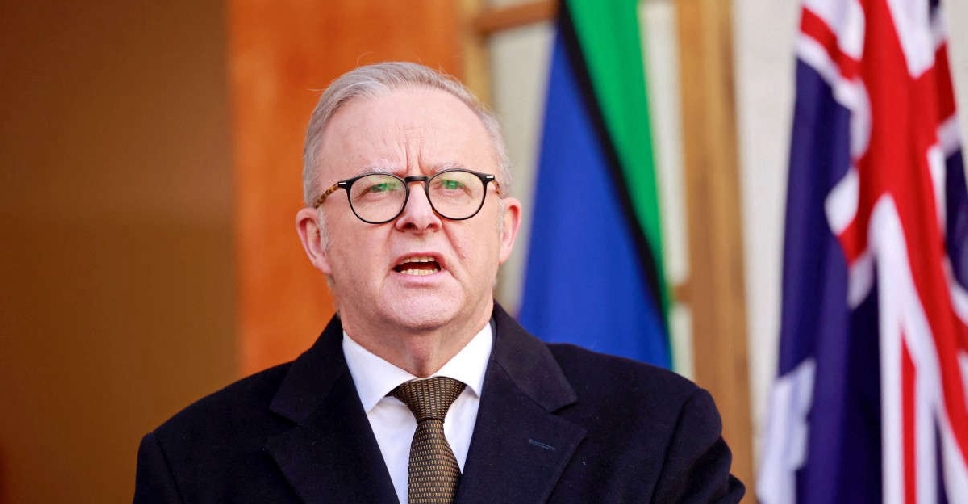
Australia accused Iran of directing two antisemitic arson attacks in the cities of Sydney and Melbourne and gave Tehran's ambassador seven days to leave the country on Tuesday, its first such expulsion since World War Two.
Canberra is the latest Western government to accuse Iran of carrying out hostile covert activities on its soil.
Last month, 14 countries including Britain, the US and France condemned what they called a surge in assassination, kidnapping and harassment plots by Iranian intelligence services.
Prime Minister Anthony Albanese said the Australian Security Intelligence Organisation (ASIO) had gathered credible intelligence that Iran was behind at least two attacks.
"These were extraordinary and dangerous acts of aggression orchestrated by a foreign nation on Australian soil," Albanese told a press briefing. "They were attempts to undermine social cohesion and sow discord in our community."
Iran had sought to "disguise its involvement" in last year's attacks on a kosher restaurant in Sydney and the Adass Israel Synagogue in Melbourne, Albanese said. No injuries were reported in the attacks.
Australia's decision was motivated by internal affairs and antisemitism had no place in Iranian culture, a spokesperson for Iran's foreign ministry said.
Iran would take an appropriate decision in response to Australia's action, state media quoted the spokesperson as saying.
Australia's security agency said it was likely that Iran had directed further attacks, Albanese said, adding that Australia has suspended operations at its Tehran embassy and all its diplomats were safe in a third country.
The government would designate Tehran's Islamic Revolutionary Guard Corps as a terrorist organisation, Albanese added, joining the United States and Canada which already blacklist the IRGC.
Foreign Minister Penny Wong said Ambassador Ahmad Sadeghi and three Iranian officials had seven days to leave, in Australia's first expulsion of an envoy since World War Two.
"Iran's actions are completely unacceptable," she told the briefing.
Security services in Britain and Sweden also warned last year that Tehran was using criminal proxies to carry out its violent attacks in those countries, with London saying it had disrupted 20 Iran-linked plots since 2022.
Iran has repeatedly denied such allegations, which it says are part of a campaign against it by hostile Western powers.

 US-Iran peace talks end without agreement, delegations leave Pakistan
 Russia, Ukraine trade accusations of ceasefire violations
 At least 30 dead in stampede at Haiti’s historic Laferriere Citadel
 Cyclone lashes New Zealand's North Island, hundreds evacuated
 US-Iran talks pause for now, disagreements remain