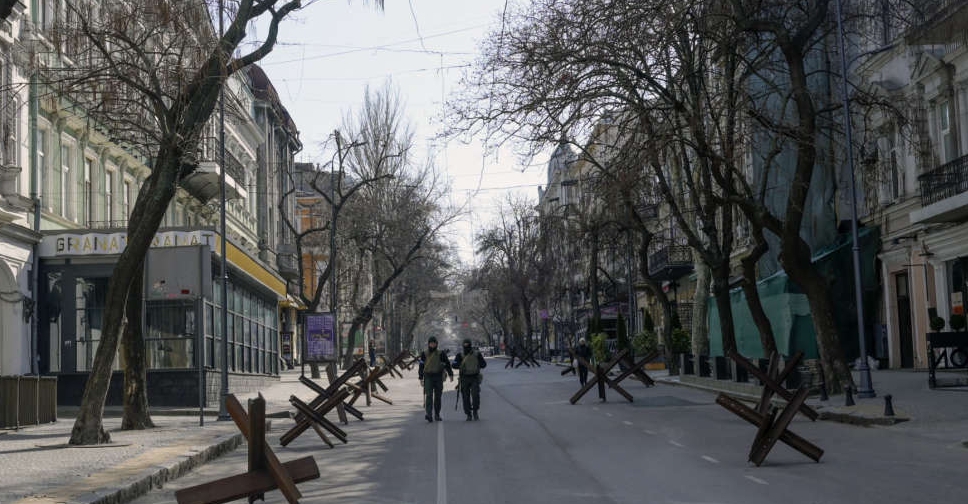
All non-critical infrastructure in the Ukrainian port of Odesa was without power after Russia hit two energy facilities, leaving 1.5 million people without power.
"The situation in the Odesa region is very difficult," President Volodymyr Zelenskiy said in his nightly video address on Saturday.
"Unfortunately, the hits were critical, so it takes more than just time to restore electricity... It doesn't take hours, but a few days, unfortunately."
Since October, Moscow has been targeting Ukraine's energy infrastructure with large waves of missile and drone strikes.
Norway was sending $100 million to help restore Ukraine's energy system, Zelenskiy said.
Serhiy Bratchuk, spokesperson for Odesa's regional administration, said electricity for the city's population will be restored "in the coming days," while complete restoration of the networks may take two to three months.
Bratchuk said an earlier Facebook post by the region's administration, advising some people to consider evacuating, was being investigated by Ukraine's security services as "an element of the hybrid war" by Russia.
That post has since been deleted.
"Not a single representative of the authorities in the region made any calls for the evacuation of the inhabitants of Odesa and the region," Bratchuk said.
Odesa had more than 1 million residents before the Feb. 24 invasion that Russia calls a "special military operation" to "denazify" its smaller neighbour.
Kyiv says Russia has launched hundreds of Iranian-made Shahed-136 drones at targets in Ukraine, describing the attacks as war crimes due to their devastating effect on civilian life. Moscow says its attacks are militarily legitimate and that it does not target civilians.
Ukraine's prosecutor general's office said two power facilities in Odesa region were hit by Shahed-136 drones.
Ukraine's armed forces said on Facebook that 15 drones had been launched against targets in the southern regions of Odesa and Mykolaiv, and 10 had been shot down.
Tehran denies supplying the drones to Moscow. Kyiv and its Western allies say that is a lie.
Britain's defence ministry said on Saturday that it believed Iran's military support for Russia was likely to increase in the coming months, including possible deliveries of ballistic missiles.


 Hungary's Orban concedes landmark election defeat
 Trump vows to blockade Strait of Hormuz after Iran peace talks stumble
 Nigerian airstrike hits market, 200 feared dead
 Russia, Ukraine trade accusations of ceasefire violations
 At least 30 dead in stampede at Haiti’s historic Laferriere Citadel