US President Donald Trump said on Friday the UAE and the US have agreed to create a path for the Emirates to buy some of the most advanced artificial intelligence semiconductors from American companies.
The deal was finalised on Thursday during Trump's visit to the UAE.
It reflects the Trump administration's confidence that the chips can be managed securely, in part by requiring data centres be managed by U.S. companies.
"We're making great progress for the $1.4 (trillion) that UAE has announced it intends to spend in the US," Trump said, speaking during the last stop of a multi-day tour of Gulf states that included stops in Saudi Arabia and Qatar.
"Yesterday the two countries also agreed to create a path for UAE to buy some of the world's most advanced AI semiconductors from American companies, a very big contract," he said.
"This will generate billions and billions of dollars in business and accelerate the UAE's plans to become a really major player in artificial intelligence," Trump added.
The UAE in March committed to a 10-year, $1.4 trillion investment framework in the United States in sectors including energy, AI and manufacturing.

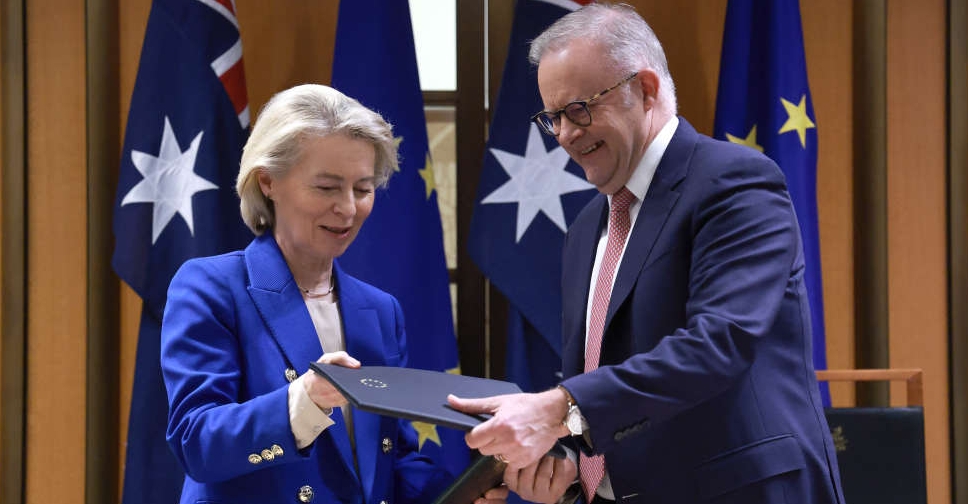 Australia, EU seal long-awaited trade deal
 Weaponising Strait of Hormuz is an act of economic terrorism: Sultan Al Jaber
 IEA consulting with governments on further oil stock releases, chief Birol says
 Dollar rises as escalating Middle East tensions spur haven demand
 Business leaders highlight Dubai’s resilience amid global developments