An informal OPEC meeting next month is unlikely to deliver any agreement to limit production because several members including Iran are still pumping below capacity. Members of the Organization of Petroleum Exporting Countries are planning to hold talks next month on the sidelines of the International Energy Forum in Algeria, the group’s president Mohammed Al Sada said Monday. But the same obstacles that prevented an agreement on proposals to freeze output in April or fix a new production target in June are still there, according to UBS Group AG. “We still haven’t reached the moment when OPEC members will agree to a production agreement, as Iran has not yet recovered its pre-sanction production levels,” Giovanni Staunovo, an analyst at UBS, said by e-mail. “Nigerian and Libyan oil output are also currently below capacity.” Oil tumbled into a bear market last week, ending a recovery that saw prices almost double from a 12-year low in February. That increased the pressure on many OPEC member countries that are still unable to balance their budgets. Al Sada’s comments indicate the group is concerned by the renewed slide in prices, according to Robin Mills, chief executive officer of consultant Qamar Energy. Iranian Opposition Efforts by some OPEC members over the past two years to limit the group’s output have come to nothing. In Doha in April, talks with other producers including Russia to freeze output ended in failure after Saudi Arabia decided it wouldn’t back the accord as long as Iran refused to join. At the group’s June meeting, another proposal for production targets went nowhere. Before both gatherings, Iran had ruled out any limits on its output as it ramped up production after the lifting of international sanctions in January. Iran’s crude production increased by about a quarter since the start of the year to 3.6 million barrels a day in July, according to data compiled by Bloomberg. However, it has yet to fully recover the levels pumped before restrictions were imposed four years ago, according to the country’s Deputy Oil Minister Amir Hossein Zamaninia. Low-Risk Strategy Crude production in Libya remains at less than a quarter of its level before the ouster of Moammar Al Qaddafi in 2011 as political rivalries divide the North African country. In Nigeria, a resurgence of rebel attacks against oil infrastructure is holding output close to the lowest level since 1989, according to data compiled by Bloomberg. Holding an informal meeting is an opportunistic, low-risk strategy for OPEC to deal with the problem of falling prices, said David Fyfe, the head of research at oil trading house Gunvor Group Ltd. in Geneva. “They’re all going to be in the same place anyway towards the end of September, why not put out there that they’re going to talk about production policy?” Fyfe said by phone. “If it doesn’t work, there’s less downside” than for a failed formal meeting. Ministers are probably taking their cues from the Doha experience, said Miswin Mahesh, commodities analyst at Barclays Plc. Although the April freeze proposal ultimately failed, the talks still contributed to the rally in prices from 12-year lows earlier this year. “The jaw bone worked the last time” because the freeze talks helped reverse sentiment, Mahesh said by e-mail from London. OPEC is trying to do the same again and “give time for markets to balance and to slow down the freefall in prices.” Bloomberg

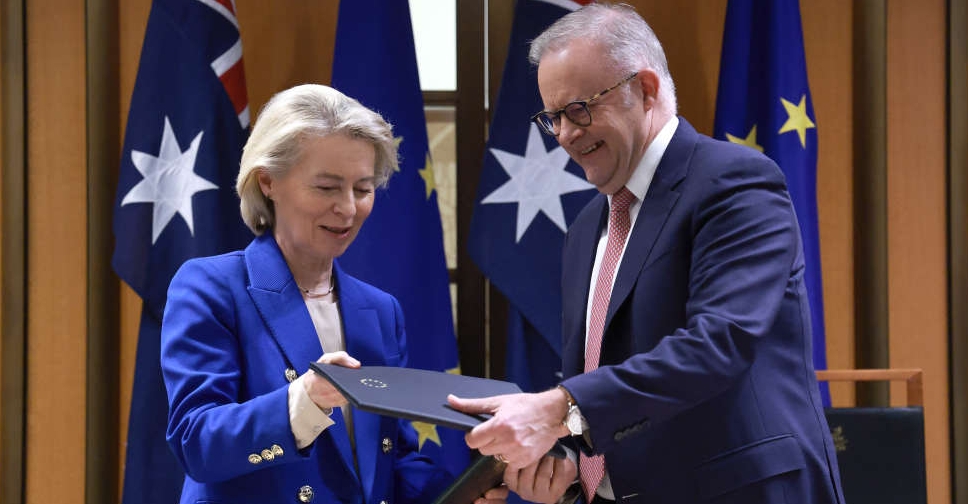 Australia, EU seal long-awaited trade deal
 Weaponising Strait of Hormuz is an act of economic terrorism: Sultan Al Jaber
 IEA consulting with governments on further oil stock releases, chief Birol says
 Dollar rises as escalating Middle East tensions spur haven demand
 Business leaders highlight Dubai’s resilience amid global developments