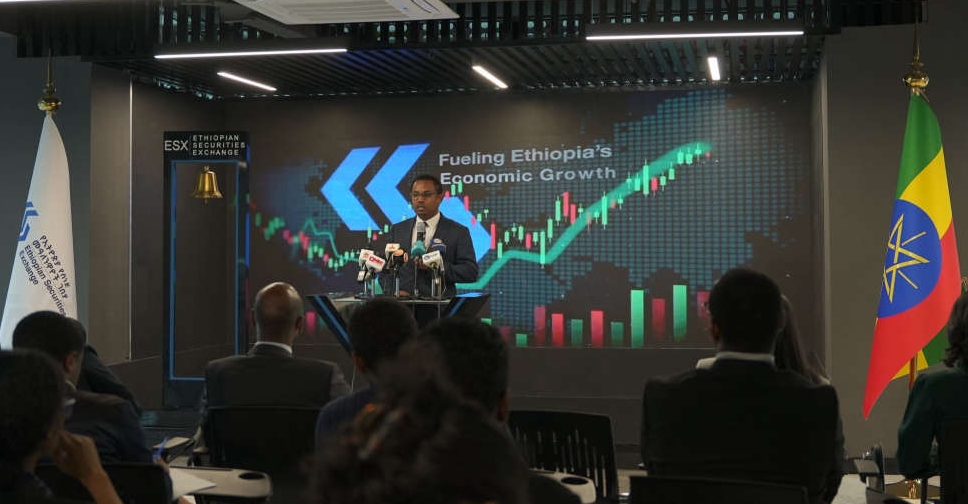
Ethiopia was set to launch a stock exchange on Friday, the latest step in Prime Minister Abiy Ahmed's attempts to liberalise the struggling economy.
The first company to be listed on the exchange is Ethio Telecom, the state-owned telecoms firm. Dozens more, including banks and insurance companies, are expected to follow soon.
Since taking power in 2018, Abiy has been a vocal supporter of opening up the heavily state-controlled economy to competition and foreign investment.
But internal conflicts -- including a devastating civil war in the northern Tigray region between 2020 and 2022 -- have led to sanctions by the United States and hampered reforms.
Ethiopia has not had a stock market in 50 years, since the 1974 fall of Emperor Haile Selassie and the rise of a Marxist-inspired regime, known as the Derg, which nationalised the economy.
In recent months, the authorities have adopted a series of economic reforms to attract investors.
In December, parliament passed a law permitting foreign banks to open subsidiaries in Ethiopia, albeit with restrictions that international firms could own only up to 49 percent of shares.
The government organised the first sale of shares in Ethio Telecom in October, permitting up to 10 per cent of shares to be sold.
Ethiopia also announced a major reform of the exchange rate in July, allowing its currency, the birr, to float freely against the dollar.
Pegging the currency to the dollar had become increasingly unsustainable.
A $3.4-billion aid programme from the International Monetary Fund and a $1.5-billion financing plan from the World Bank were held back until Ethiopia accepted the reform.
Africa's second most populous country, with some 120 million people, Ethiopia recorded high rates of economic growth -– often exceeding 10 percent annually –- between 2004 and 2019.
But the economy has been hit by internal conflict and the effects of the Covid-19 pandemic and war in Ukraine.
Growth slowed to an average of 5.9 per cent between 2020 and 2023, while inflation soared from 20.4 to 30.2 per cent over the same period, according to the World Bank.

 75,000 tourists welcomed during Dubai summer campaign
 China's Huawei sets 2027 launch for new AI chips as it targets Nvidia
 Arab Monetary Fund marks Golden Jubilee in Abu Dhabi
 Aster to invest in International Modern Hospital under AED1bn UAE expansion plan
 UAE unveils unified tourism identity, grand tour platform